
Learning is the most powerful tool we have to empower ourselves and our children early in their lives. There are two big factors when it comes to a positive learning environment, and those two things are the environment itself and an understanding of how we, as people, best process new information. Every single individual is different in the things that interest them, the things that stimulate them, and the ways they learn new information in school or out in the world.
For young children, it’s essential to understand how they prefer to learn information, and it’s best to take steps toward discovering this information as early as you can. The term for this is learning style, and it defines the various ways in which people best handle new information. Determining your child’s learning style takes patience and attention and won’t happen overnight! First, let’s take a look at a few examples of learning styles. Keep reading to learn more!
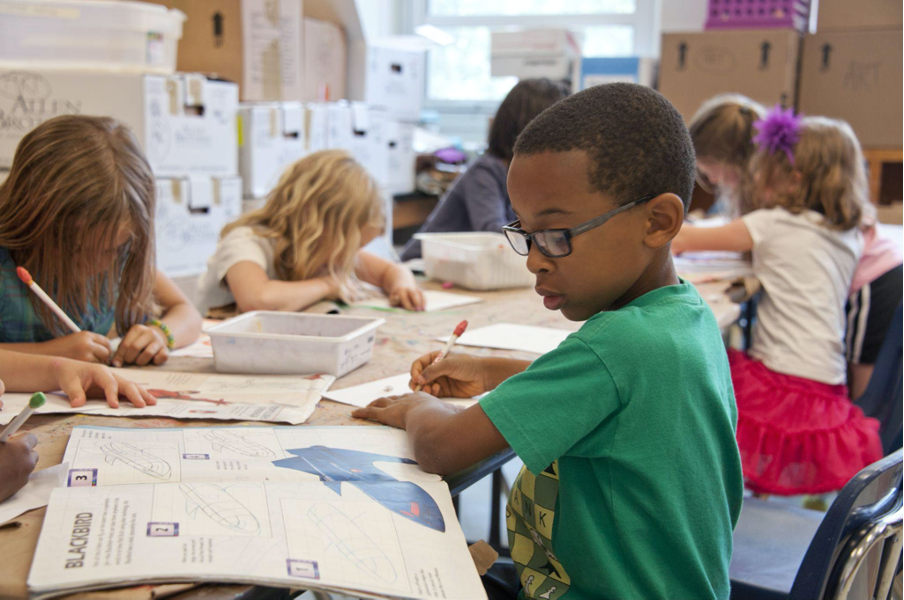
What Is a Learning Style?
Let’s take a moment to further define what a learning style is. Everyone’s brain processes things differently. Some people respond more towards imagery, while others may learn most efficiently from a hands-on project. In a classroom, the implications here are that if the task is to learn Chinese, every student in the room is going to have unique ways of relating their experiences to the task at hand. For some, that may mean pictures. For others, it may mean tackling a conversational project.
Visual
The first learning style we’ll talk about is the visual learning style. Children with a visual learning style will respond to information given in a visual format, such as charts, graphs, diagrams, or pictures, to relay a piece of information. The visual learner needs to see the information organized and represented visually. For visual learners, classrooms are a great learning environment.
Auditory
The second style we’ll cover is the auditory learning style. Auditory learners are best taught through detailed explanations, although some of this information may be reinforced by physical notes, graphs, or visual tools. Auditory learners also benefit greatly from a classroom environment where a teacher is typically giving instructions or explanations of information, whether the topic is math, history, or science.
Kinesthetic
The kinesthetic learning style refers to individuals who require physical, hands-on activity to learn. This can be tricky with certain subjects like English, but there are always physical tasks and activities that can be implemented into a lesson to benefit kinesthetic learners. These types of learners benefit from things like projects, science experiments, or craft activities to help them fully engage with the material at hand.
Verbal
Verbal learners are similar to auditory learners but respond more to the use of words and language as a way to remember and retain information. This could come in the form of reading, writing, listening, or speaking games. Word association games and rhyming exercises would be an effective way to teach something to a verbal learner, as well as word memory games.
How to Determine How Your Child Learns
Determining how your child learns takes a bit of time, a bit of patience, and a bit of trying things out. The reality is you won’t really know until they start showing signs towards one avenue or another. The responsible thing to do for both teachers and parents is to include some of each of these things in students’ and children’s daily lives so they get a taste of everything and can choose to engage with whatever learning style works best for them.
One of the biggest problems in child development, both with teachers and parents, is the assumption that whatever works best for the person delivering the information is going to have to be alright with everyone in the room. We have to differentiate the way we teach information, both in the classroom and at home, to make sure that our developing children have a chance to experience the world in the way that works best for them.
Conclusion
The question, really, is not how to determine my child’s learning style, but rather how can we as adults provide a well rounded environment for our children to explore their learning style on their own. This way, they can show us how they learn rather than parents or teachers making assumptions based on observation. Children are intuitive, and they will gravitate towards the things that stimulate their brains the most.
Include some visual, auditory, kinesthetic, and verbal learning to give your children a well-rounded experience whether they are at home, with their peers, in a classroom, or simply out in the world. Learning styles are a catalyst for growth, but they must be engaged in by the student rather than being forced to learn in a way that doesn’t work for them.
