
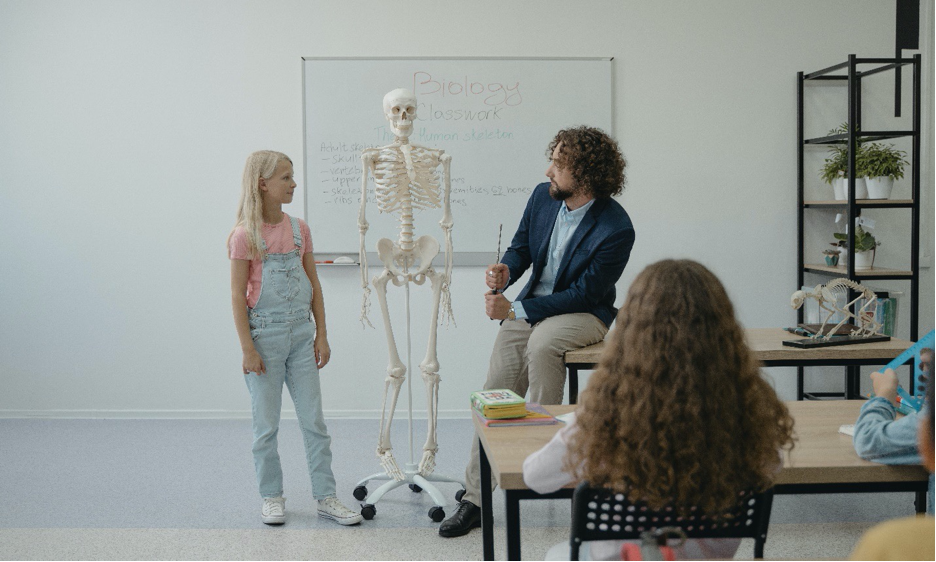
You don’t need to possess a superpower to see that a classroom suffers from low student engagement. Think about students dozing off on their seats, writing on their notebooks sloppily, and trying for the period bell to ring. What do you think is wrong in a classroom where more students are like that? Many would suggest it to be an issue of a lack of engagement when students are not actively taking part in what goes on in the class. For them, a teacher is blabbering indecipherable concepts while they are a part of another world. As a result, you won’t see students excelling and learning in such classrooms where student engagement in classroom activities is negligible.
Due to this important reason, teachers have long realized the indispensable nature of student engagement for a class to excel. But not all teachers know how to keep their students engaged and help them master the course content. To curb this issue, many schools carry out periodic training of their staff where they are taught ways to enhance students’ input in the class.
Often these trainings also include simulations where teachers are put in real-life scenarios and judged on improving class participation. But these drills need the services of professional trainers who know how to work with teachers from various backgrounds and with personal biases and unconducive personality traits such as anger, irritability, and much more.
Often these trainings are conferred by professionals with qualifications such as Master of Science in Education in Curriculum & Instruction and other similar degrees in education. During their master’s degree courses, these experts are trained to impart training to teachers and professionals from business organizations.
If you have not been to these simulations and teacher training sessions but still face a lack of student engagement in your class, you can take the help of the below-mentioned strategies to improve your class dynamics.
Make sure the students are emotionally safe in your class
Some teachers have this strategy to shame and belittle their students when they want them to do something. Often they compare one student with the other. This environment hampers the creative abilities of the kid even more. When students see themselves compared with other classmates, they tend to not participate in challenging activities in fear of losing. So, often it is the attitude of the teachers that keeps the students away from all the fun in the classroom.
So, have this strict rule of not belittling your students, letting them down, drawing comparisons with others, or asking them to shut up. The same rule also applies to students in their interpersonal interactions. When you develop a conducive environment for your student, where they do not fear your intemperate judgment, they will feel more motivated to participate.
Create a rich combination of easy and challenging activities
Often students do not participate because the class is not intellectually rich enough to challenge them. If all the activities are too easy for the kids’ level, they will lose interest in them. The reason is very straightforward; children pay attention to things that appeal to their curious minds. Research suggests that students participate in assigned tasks when they seem worthy of their time and effort. So, you must design activities that kindle interest in them. You can challenge the kids by creating timed activities, making the task an important milestone that needs to be achieved within an allocated time.
Moreover, the tasks should be a combination of varying levels of difficulty. You may start with an easier worksheet but gradually move to more complex ones. You must instill the thrill and stimulate but positive anxiety. This way, you will see that some students will excel and be in a higher position while others will struggle a little, giving the former a chance to help the latter.
Promote collaborative learning
Another powerful facilitator of student engagement is the concept of collaborative learning. Design activities in which students work with each other. This collaborative learning amplifies the results compared to when they work individually. Working with other kids also instill responsibility and a desire to be a meaningful part of the group, leading them to put in more effort. At the same time, they may also develop a bonding with other class members. Classrooms where students work together often create an environment where students solve their mutual issues independently without taking them to the teacher. However, you must prepare the students to work in such collaborative settings to facilitate working with and supporting the ideas of others. You must implement rules and strategies that ensure that students communicate effectively and behave constructively. Some strategies include developing heterogeneous groups of students with different abilities, setting point scores for group and individual performance, and fostering personal accountability.
Conclusion
Developing engagement in students requires the teachers to first think inward. What are they doing in the class, fostering disengagement in students? Is it due to boring activities, a lack of challenge and stimulation, or is something else contributing to this issue? Reading literature on student engagement can help the teachers find the gaps in their practice and strategies to overcome them. It is also essential that teachers take part in training conducted by their employer to refresh their teaching methodologies and revisit their personal biases interfering in their teaching process. Those teachers who face disengagement in class but are still not doing anything are prone to failure once students stop showing better results or fail to achieve their learning milestones.
