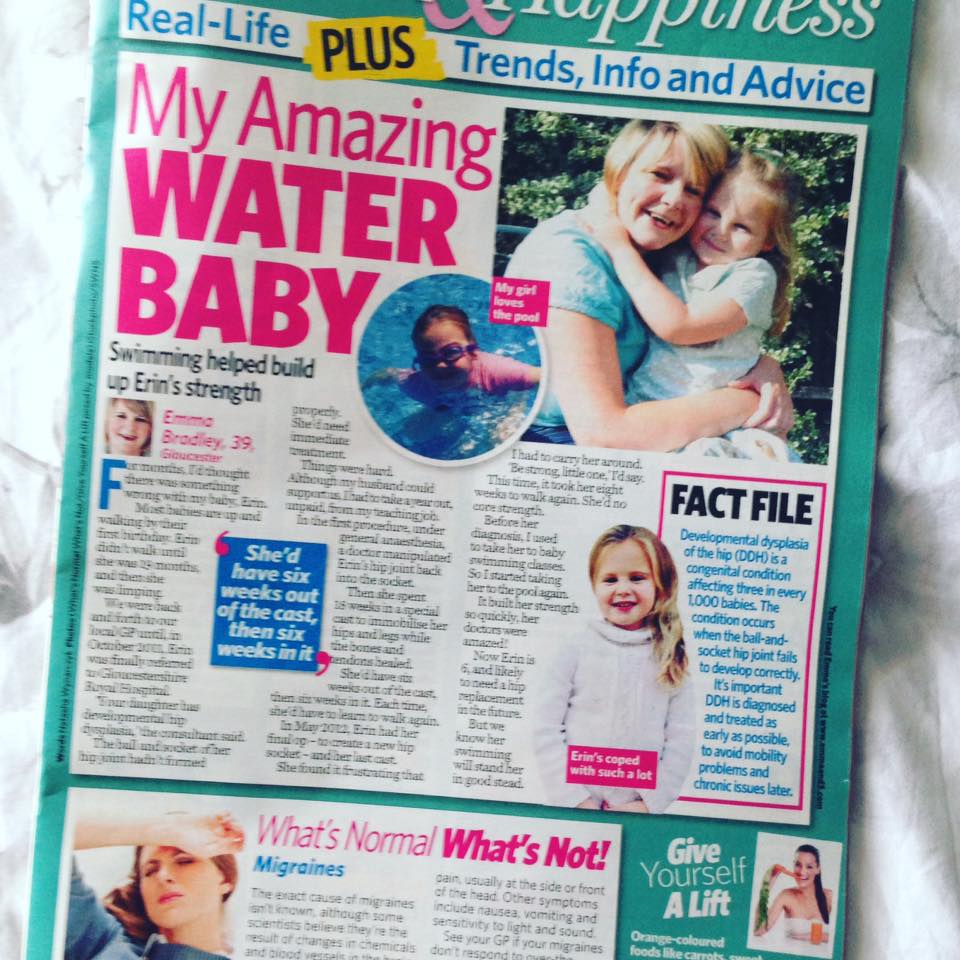
Each June we head back to Erin’s hero, her surgeon. We have a yearly date, we share pleasantries and have a brief chat before the language becomes medical. I and Erin know and understand terminology that we should struggle to pronounce. Erin is undoubtedly in the minority as a six year old who can describe the anatomy of the hip joint. Ask her and she will explain that her ball and socket joint didn’t develop, question her and she can explain what happens in a pelvic osteotomy. Ask her more questions and she may show you the scar (that is fading) that snakes across her hip or the smaller scars where the pins went. The scar is neat bar the bobbly bits at the top that are keloid and itch at times. I start thinking about the appointment in May because hip dysplasia or DDH is a shadow in our lives. I can often forget about it now that we are four years down the line but then although we are further away from the previous surgeries it means we are heading towards future surgeries. It would be nice to reassure Erin and myself that ddh is done but for Erin that is unknown.

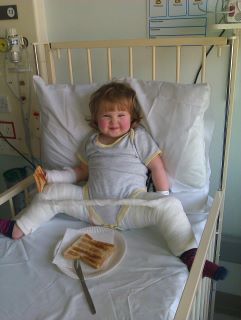
Erin was late diagnosed and that leaves a nasty legacy you see. We can’t have the all clear because a late diagnosis leaves a question mark. We don’t yet know when or if but studies have shown that as Erin was diagnosed after 18 months that she is likely to require more surgery, the odds are stacked against Erin. She is likely to need a hip replacement at an early age and she is likely to develop pain at some point. As a mother that is hard to fathom after all no one noticed her dislocated hip at all those well baby checks. No one thought to xray because of that extra crease in her thigh. No one joined up the dots and followed the correct procedures.
After Erin had treatment, we, as a family decided that her late diagnosis wasn’t good enough and since then we have done what we can to raise awareness and money. I am active in a couple of huge DDH support groups and do my best to support others going through hip dysplasia. I have raised much needed money for the charities that seek to research and find answers. However I am probably most proud of the media coverage I have had where I have been able to warn others about DDH and educate parents on the signs and symptoms. I also spoke at a training day for midwives and health visitors. I had been invited to talk to them from a mothers perspective during a training day. As I told our story I sobbed and as I looked at those health professionals many of them were also crying. I am sure that my experience has changed how they carry out the newborn screening programme. I am sure they now don’t dismiss the signs, the extra crease, the leg length discrepancy. Another way to stop the late diagnosis is to make sure you complain loudly to the local health authority. One way to make them sit up and listen is to sue for medical negligence, if they have failed your child. If the hip checks were not carried out correctly or if the signs and symptoms were observed and noted but an xray not carried out (or ultrasound if under six months) there could be grounds to sue. There are specialists like, First4SeriousInjury that can help you with the next steps on the route to compensation. You may not get an apology but it is a way to make the health trust look at its systems and policies and hopefully ensure more health professionals are competent in spotting hip issues.
For us the future is unclear but we continue to raise awareness and do all we can to educate everyone about hip dysplasia.