
Remember playing pong paddle or Pac-Man ghost with a computer gamer mouse? You may not have known it then, but you were already using artificial intelligence as far back as the 80s. Although most people think it is, AI isn’t exactly a recent innovation, especially as it regards video games.
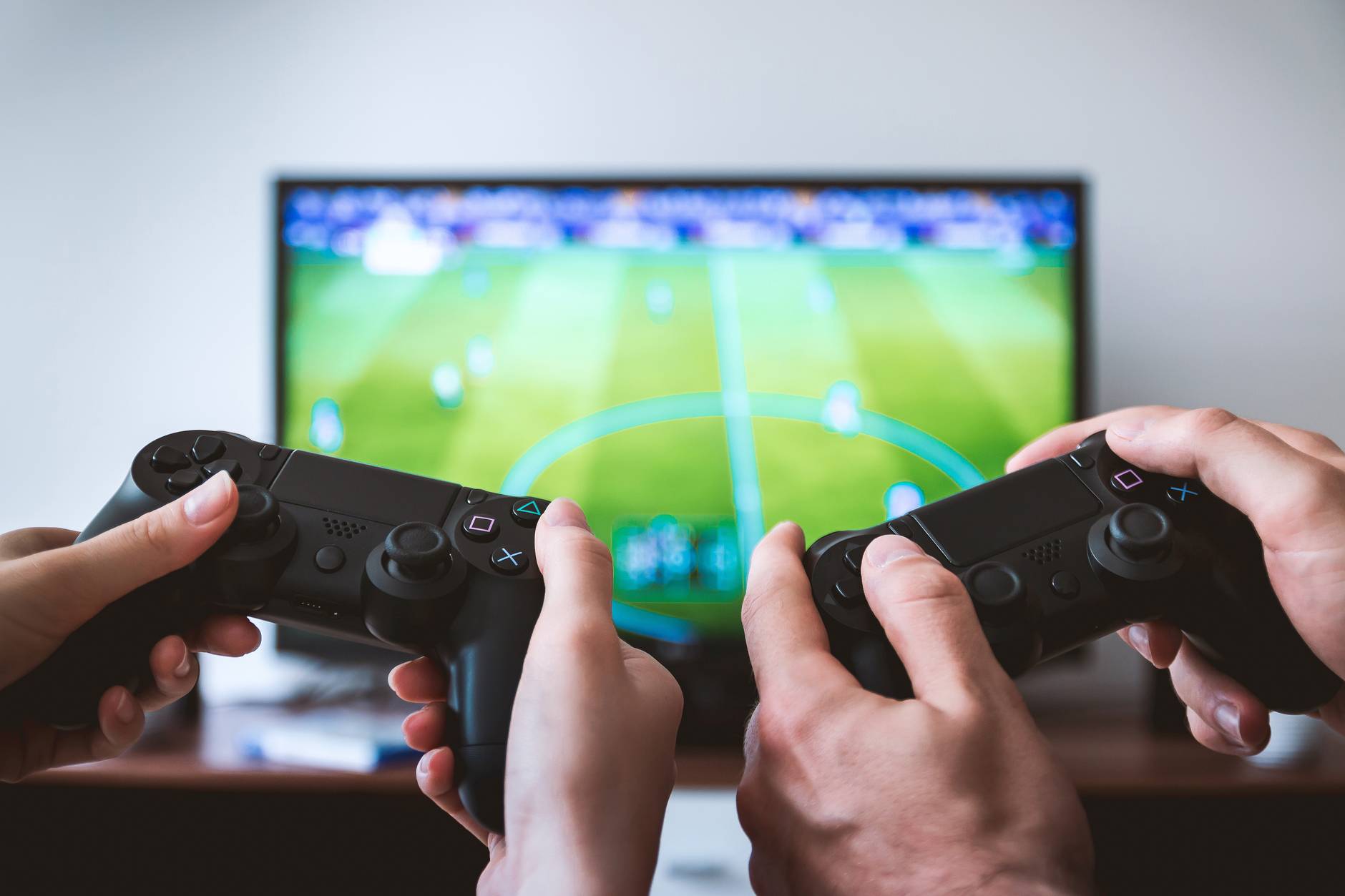
As early as the 1950s, mathematician and cryptographer Claude Shannon had already created a one player chess game that posed human prowess against a computer. Video games have always been a key feature of AI and a foundation for the simulations, virtual environments, and the realism that makes video games so enjoyable.
As such, the primary objective of AI in gaming has always been to deliver a life-like gaming experience to its players so that they can have something to battle or interact with on a virtual platform. And it’s not just about improving the players’ experience.
AI is a program that is capable of teaching itself; it becomes stronger and more intelligent as long as it is fed the correct data. Take AlphaGo’s AI for example, which gained game for beating the best of the best human GO players in the world.
AlphaGo’s AI was trained to beat humans by observing millions of old matches and is still gathering data that can allow it to continue beating human players. As such, AI is not only used to heighten the gaming experience, but also as a self-teach mechanism that allows video games to get better and better as time progresses.
The history of AI in video games
As mentioned earlier, the most commonly played role by AI is controlling non-player entities and characters. When designing video games, the designers use as many techniques as possible to make these non-player characters appear as intelligent as possible.
One of the most widely used techniques to make this happen is known as the Finite State Machine (FSM) algorithm, which was created and introduced to games back in the 1990s. In an FSM, a video game designer generalizes all possible outcomes and scenarios that an AI can come into contact with, and then he or she programs a particular reaction to match each situation.
Basically, an FSM AI in video games reacts to a human player’s action with its pre-programmed behavior. For example, in a car racing game, AI would speed up when a human player approaches and then retreat when it’s low on fuel or supplies.
Another super-advanced technique is known as the Monte Carlo Search Tree (MCST) algorithmic. MCST is designed to use random trials until a problem is solved. This is the same technique that was applied in Deep Blue in 1997.
If you are a regular reader of the best books on artificial intelligence (if not, check out this listicle from DAP), you would know that Deep Blue was the 1st computer program to defeat a human chess champion. At various points through the match, Deep Blue would utilize the MCST to ponder the possible moves it could make, then it could consider all the possible moves that its human opponent would make before making an actual move, and so on and forth.
How is AI helping to change video games today?
AI is being used to make smarter games
Numerous algorithms are constantly being developed to make video games smarter than they already are. The process of making a game smarter involves ensuring that the non-playable characters in a game produce intellectual and human-like reactions.
In the past, the cheapest and best way to make characters more intelligent was by using scripts. However, algorithms and AI systems are designed to assist in managing and controlling these non-player characters, which not only removes the need to hard code these characters, but it also saves the programmers’ time and energy allowing them to focus on other aspects of design.
AI helps to make video games more realistic
In the past 10 years or so, video games have grown by leaps and bounds, especially when it comes to the graphics, as well as offering players a more real-world gaming experience. There was a time 20 years ago when 2D was a buzz word.
Many games today now feature 3D rendering, which produces much better visuals, physics simulation, and even virtual and augmented reality to make video games completely different from what they used to be all those years ago.
Developers are today using AI upscaling in way of machine learning to improve the quality of classic games such as Atari. By training AI from old images that are related to the game, programmers are then able to generate high-resolution images that are more life-like.
AI for creating amazing video game universes
There is nothing like playing in an infinite universe, which is probably why video games are so appealing. Games often have an infinite number of universes and worlds to discover and they are usually generated the more the player explores.
Developers utilize a technique known as procedural generation that helps with the process of pathfinding and world creation. Although procedural generation cannot exactly be categorized as AI, in the future, AI will be used to create environments within the games that can cater to the players’ needs and preferences. When used in conjunction with AI, the generation of new towns will occur based on the players’ in-game experiences such as the creation of a whole new town or object.
Final Thoughts
If you’ve ever played computer games or video games, whether they involved racing cars, bikes, shooting, or just strategy, then you’ve been using AI longer than you realize. Those enemy bots or neutral characters that are always lurking in the background making your gaming experience better are a product of AI.
If you are like many out there, you probably envision that the majority of today’s games are made using sophisticated AI for all those non-player characters or bots. However, many developers actually avoid incorporating these sophisticated AI into their games for fear of losing the interest and curiosity of the player.
The goal of AI in gaming has never been to create tough unbeatable entities that will keep players glued to the game. Instead, it is designed to maximize the player’s experience and enjoyment so that they can keep coming back to their favorite games over long periods of time.

One Response
Thank you so much for this enlightening post, I have significantly got some thing right here and I will bookmark this page for your next upcoming post.