
Revision for GCSE’s, many parents want to know when should their teenagers start revising, how much and for how long. As a teacher, I have many years of experience in preparing students for GCSE exams and here we explain when revision for GCSE’s should start and how to ramp it up in the final stages.
These 9 tips I’m sharing on revision for GCSE’s will help your teenager feel prepared and go into the exams with the best mindset. And believe me, a great mindset is so so important.
When to start revision for GCSE’s
GCSEs are often the most major exam in a students life and as a teacher parents often ask me about revision for GCSE’s. Most students have to take GCSE’s and they can have a significant impact on the direction of your life whether you choose to continue studying or look for apprenticeships and employment opportunities.
You should begin revision at least six months in advance of your GCSE exams. The amount of time spent revising as well as the revision focus and dedication should increase at the three-month mark, then again at the one month mark and two-week mark.
Last-minute revision is often about regurgitating the main facts, figures and quotes about a particular topic. At this stage, it’s too late to begin understanding them and digesting additional information. When I start talking or teaching revision skills to my students I make sure that they understand the benefit of brainstorming activities for students as this method gets them off to a great start and helps with revision for GCSE’s.

Tonight I have been to a parents evening at my year 11 daughters school. Her school is very switched on and I couldn’t agree more when the headteacher said that this year is about three things, remembering, memorising and deadlines.
He understands the children really well and has put so much in place for them. It might seem that they have all the time in the world yet, but when you consider mock exams will be in the New Year and the real things start in May it is not something way off in the distance. If your child gets anxious then this post How To Calm Down will help also. Before revising ensure that your child knows how to take notes from a textbook and how to brainstorm.
When should you start revising for GCSEs?
To revise for GCSE exams it is good to start at the very beginning of Year 11. If you have good routines and plan your time well you will reap the rewards later in the year. This approach will ensure that each subject is given adequate time and any real gaps of knowledge will be filled.
Parents and students often ask me when is the best time to start revising for GCSE exams and how should they manage their revision. To prepare for revision parents should read my top tips to encourage a teenager to study.
GCSE revision tips & techniques
Below is a list of my favourite GCSE revision tips and techniques. Implementing just a few of these tips and tricks can have a huge impact in the quality of your revision.
Create a study space
Consider place you will study. We have recently made Chloe’s bedroom more student-friendly and it means that she can work in an organised space which will undoubtedly make the revision for GCSE’s easier.
Plan a revision timetable
This should be done by looking at the week and including the social activities that the young person has. Then the timetable is realistic and workable.
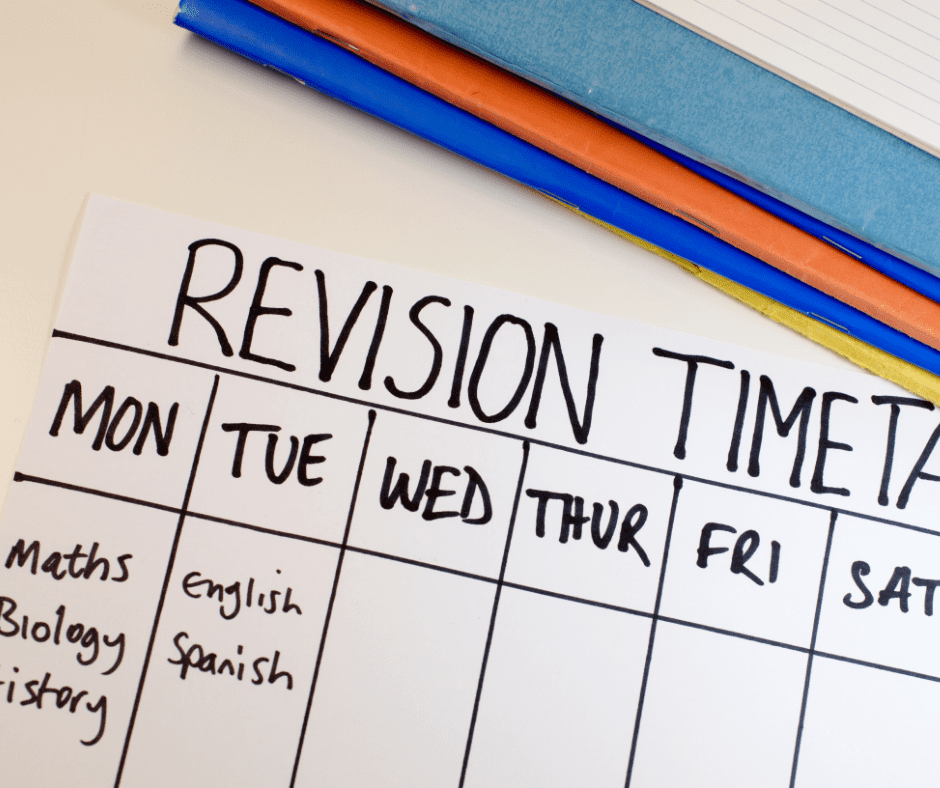
You can make your own or find a template with a quick google search. For Chloe, she designed a two-week timetable that gives her time for every subject plus her downtime for her hockey and seeing friends.
GCSE mock exam papers
Use a range of resources to aid revision. I am a big believer in doing past papers and exam questions for revision. Nothing beats doing what you will face in the exam. It is easy to not to push yourself when revising and stick to what you already know.

But that doesn’t help you improve, past papers can be found online and students should use the mark schemes to mark them also. This ensures that they are familiar with the syllabus and begin to include the key phrases often seen in the mark scheme.
Take notes in class
Spend time going over your class notes. A good tip is to have a notepad available and when you get home to write down what you learnt in each lesson. What can you recall? Also, read your notes and if there is something you don’t understand find out or ask your teacher to explain it again.
GCSE revision guides
Use specific revision aids for your subject, make sure you know the exam board and get books that support the board you are using. Chloe has recently been sent the Collins Revision books and she is impressed with them.

Each book has course notes and knowledge in the first half of the book. It is broken down into sections that help you understand the key points. The second part of the book has questions to test knowledge and prepare you for the exam. The answers are included which is pretty essential at this stage!
Mark your own work
Coming on to the answers, as a former teacher I know that it is important for students to understand their mistakes. Therefore it is good practice to mark the work yourself and then with the ones that are wrong go back and look at why and redo it until you have got it sorted.
Past papers and marckschemes can all be found for free on the internet. Plus your teachers will be more than happy to point you in the right direction finding mark schemes, after all they want you to get in some revision for GCSE’s
Speak to your teachers
Seek out your teachers, they are experienced and understand the course and its requirements. Use them to the fullest, talk to them about the bits you are struggling with.
School revision sessions
Attend revision for GCSE’s sessions put on by teachers. Give up some after school or lunchtimes to attend those extra sessions. It is not forever and come the summer you will be glad you did. An extra hour or two a week in school will make a huge difference. This will help you revise the right topics and guide your revision sessions.
Slow and steady…
Finally remember the tortoise and the hare fable, slow and steady will get you to the finishing line. Keep going, keep considering the finishing line and plan on how you are getting there. This is why it is the smart student who knows when is the best time to start revising for GCSE exams.
By revising in earnest throughout the year you are giving yourself the best chance of success.

3 Responses