
The Montessori Learning approach is a child centered approach that has developed many talented individuals including Jeff Bezos, Larry Page (the Google founder) and Anne Frank.
When it comes to our children’s development and learning, we all have a different approach. Some of us are happy to do as much as we can at home, others are more inclined to try and find a way to incorporate learning to match our child’s personality and concentration levels. Upon doing some research, you might have come across or heard of Montessori Learning. But do you know what it is and how you can use it at home?
With that in mind, here is a little more information to help parents understand this type of play or home learning. As a teacher this is the approach we often use in early years settings.
What is Montessori Learning
Montessori Learning is a method of education that was created in the early 1900s by an Italian doctor by the name of Maria Montessori. Maria carefully observed the way children interacted, played, and learned, and upon doing that, decided to create a school that aimed to support their natural development while taking on a child-led approach.
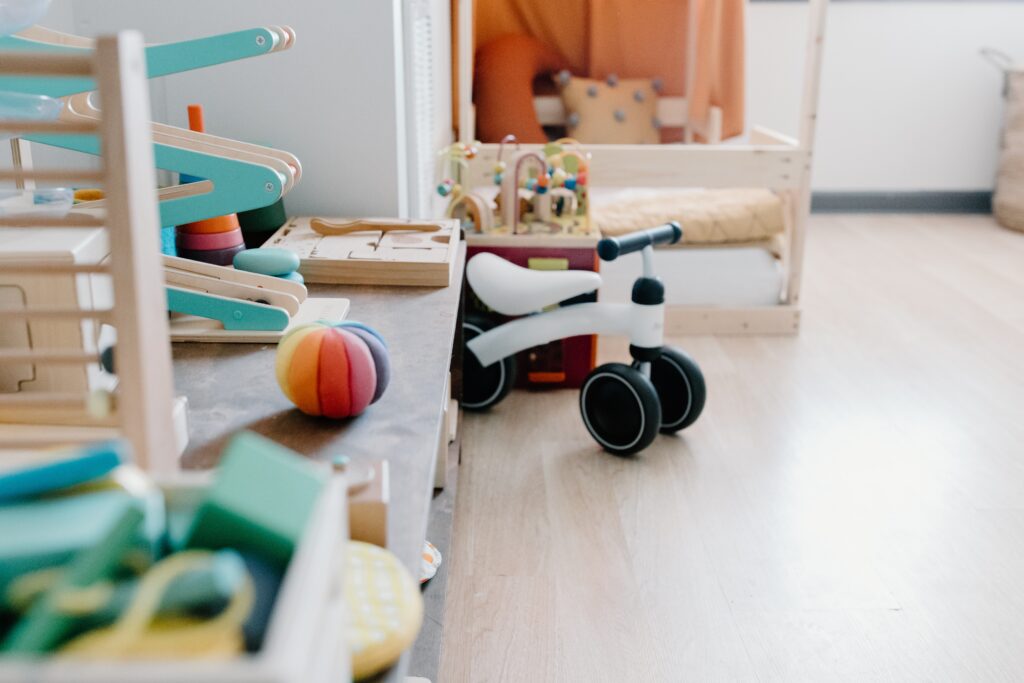
That all sounds great but what does that mean to us today? In a nutshell, the Montessori learning method is all about following the child. For example, instead of you deciding what your child will learn that day, each child will decide for themselves by choosing activities pre-prepared for them. Or a step from that would be to decide on what you do, based on the questions that your child might ask or subjects they have initially shown an interest in. This allows them to learn at their own pace, encourages independent learning and also self-motivation. Having a range of Montessori toys available will enable this learning style to take place anywhere.
The Montessori Learning method relies on a few factors in order for you to be successful with it:
- Respect for your child – Each child will develop at a different rate, and the Montessori Learning method champions each child rather than looking at comparisons. The child has a voice and is heard. They have control over what they learn and you respect their decision on what they choose.
- More natural learning – It encourages you to expose your child to more learning opportunities. We learn all the time, so any moment is an opportunity to learn and experience something new.
- A prepared approach – Montsessori learning is all about focusing on five main areas. These include practical life, sensorial, maths, language, and culture.
Why is Montessori Learning good for child development?
There are many different reasons why Montessori Learning is good for your child. Here are some of the reasons why you might consider it yourself.
It shows independence
Montessori Learning is all about a child-led approach. It means that your child learns from an early age to make their own choices and also work at their own pace. It also encouraging to enable a child to figure things out by themself. It is about observing and helping your child to figure things out for themself. For more on raising independent children read this post.
It helps with self-discipline
It might seem that Montserroi is all about freedom in learning, it does help to create an air of self-discipline with your child when it comes to your learning. As there is a level of independence, it will enable your child to learn all about making choices and sticking with them.
Encourages social skills
Montessori Learning combines different ages. It encourages your child to pick age-appropriate activities but as they work together, peer-to-peer learning is also encouraged. The younger children learn a lot from older children by observing their learning behaviour, and older children learn other skills such as empathy and patience while observing and helping younger children.
Passion for learning
The one thing Montesorri will help with is to enable a passion for learning within your child. As they choose their activities and also have independence in their learning, they will start to feel more passionate about what they are doing. The child is in control of what they learn, which helps them to feel more passionate about what they are doing.
Age-specific activities
Last of all, with Montessori Learning you will always have age-appropriate activities ready for your child. This means they are always going to feel challenged but also will feel a sense of achievement when they complete them.
The Montessori learning approach
You may have come across Montessori preschools and wondered if you should be using one or if it is better than other preschools. Many nurseries or preschools have adapted the Montessori learning approach, and aim to be child-led where possible. Montessori nurseries tend to be privately run and as such more expensive than traditional settings. However, the cost should not be a barrier to using this learning style with your child at home. For me the essence is being available for your child, noticing their play and then joining them by asking questions or providing more opportunities where they are showing an interest. It is about meeting the child where they are.

What can we do at home to facilitate this type of child led learning?
There are a few things that you can do when it comes to encouraging Montessori Learning at home. One of the first things to consider is to organise your environment. Having activities to hand in as well as equipment to use can help encourage the independence of learning. It is also about using motivation rather than discipline when it comes to your child. Books with activities in and also printouts from the internet and leaving them for your child to see and reach is also a good idea.
Jacques of London has some wonderful products that are designed for an enquiring mind. The Magnetic Crane Truck for example is way more than just a truck! Playing at one level this truck encourages imagination, children will create their own worlds. In addition, the wooden toy is an ideal introduction to early science. Use this early development & activity toy to introduce kids to magnets and forces. Kids can use the magnetic toy crane to pick up the colourful wooden containers, demonstrating the magic of magnetism. Kids will be fascinated and will want to find out more about science.
The Wooden Animal Toy is one of my favourite products and children play with it in so many ways, making it great value for money. At the first level, this helps children recognise the animals and might encourage conversations around the noises they make, or where they live. As they take this further children will utilise their fine motor skills when playing with their seesaw toy. They will also experiment with shape and improve their concept of space and organisation when moving the animals and trying to balance them.
Other great Montessori toys would include playing dough, this is brilliant for strengthening hands and fingers. This also shows that you don’t have to spend all the time, you can make the dough at home yourself following a salt dough recipe like this one.
Lacing and counting toys are all based on the Montessori learning approach too, you could make your own lacing cards if you wanted to get creative.
Montessori learning is not limited to indoors either and includes getting outside and exploring the natural environment. So wrap up warm and get moving outdoors!
Hopefully, this might encourage you to consider Montessori Learning with your children.
