
It was an amazing summer for women’s sports with record viewing numbers and many achievements but the fact remains that girls drop out of sports at alarming rates when they approach the teenage years.
Research suggests that girls in sports declines due to a number of factors including puberty and societal pressures on how girls should look.
This has always interested me as I was really into sports and especially hockey until I went to university. My daughters are also into sports with my now 22-year-old being a national league hockey player, a qualified PT and working in a gym as a coach. So I asked Chloe and her 12-year-old sister why they thought they were fewer girls in sports than boys.

Why are there fewer girls in sport?
Women in Sport research found 1.3 million girls in the UK, who enjoyed sports in primary school, are dropping out of sports during their teenage years. Deep-rooted negative attitudes which include a fear of judgement, combined with the challenges of navigating puberty, are affecting their enjoyment of sport. Six out of 10 teenage girls are also not meeting physical activity guidelines of 60 minutes of activity per day. Women in Sport warned a generation is at risk of slipping into a lifetime of inactivity.
This is pretty shocking and the impact that this has on girls’ health and well-being is huge. We know that exercise releases those happy endorphins which can help beat stress and anxiety all of which are affecting teenagers in ever-growing numbers.
I asked my own daughters and they offered some really useful insights on the subject of girls in sport. My 22-year-old explained that it can be about how we/they look. She pointed out that she decides in advance when to train as she has to include washing her hair and styling it again once dry. More than once she has put off a gym session because she doesn’t want to wash her hair. She pointed out that her 18-year-old brother wouldn’t have the same thought process as boys can literally wash and go.
Secondly, we talked about how parents channel the genders into different sports. Boys are often taken to football from a young age, whereas girls tend to do dancing or gymnastics. From a young age, boys are much more physical and encouraged to be competitive whereas girls in sport are more about dancing and elegance. Therefore girls are not playing team sports from a young age.

Then there is the difference in sports at primary school for girls and boys. The boys continue playing football and are introduced to more team sports. Girls will do sport in primary but the range of sports is limited and therefore girls are not trying out more sports, many schools don’t do hockey for example. By the time children transition to secondary school girls already have limited choices in sports and have decided it is not for them.
This transition happens at the same time as puberty which makes girls feel uncomfortable in their bodies typically. My eldest pointed out that it isn’t necessarily girls dropping out of sports but they never really got started anyway. It is only once at secondary school that there are opportunities for competing against other schools or representing your district or county.
To really excel in sports one of two things needs to happen. The first is attending a school that prioritises sports and this mostly happens in the private sector. An example is that just this week my 12-year-old played in a district hockey tournament and of the 8 or so schools playing, 3 were grammar schools (two single sex schools), 3 were fee-paying schools and 2 were very affluent middle-class schools. The local comps were all noticeably absent.
My eldest was actually told by a hockey coach when she was about 15, that had she been at his (private) school then she would be an awesome player who would have gone much further and been ‘spotted’ for more opportunities.
Secondly, if parents don’t encourage or take their girls to sports clubs outside of education they are likely to drop out of sporting opportunities or never get them in the first place. By taking my girls to a local hockey club both have found a love for the sport. But that is because I take them to weekly training sessions and I watch when they play games at the weekend. Even now I try to watch as many of my 22-year-olds home games as possible.
Women in Sport
Women in Sport has partnered with 20 organisations including England Netball, RFU, England Golf, British Cycling, the Great Outdoor Gym Company and Swim England, to help break down barriers to participation by offering accessible ways to try out new activities in supportive environments. The campaign is also being supported by ITV This Morning doctor Zoe Williams. Centred around the theme of belonging, the month-long campaign is the biggest to date.
I am also supporting the campaign and want to offer my suggestions on how we can get and keep girls in sports.
4 Tips for Keeping Girls in Sports
- Mums and mum figures are really important when it comes to retaining girls in sports. Get involved and take them to practices and show an interest in their sporting hobbies.
- Get involved yourself! we are our girl’s role models and by getting involved they will copy us. We need to also prioritise being active. That means carving out time to do physical activity ourselves. We are terrible for not finding the time and we are then teaching our girls the same. Mums are often time poor but we need to lead by example as we are then setting the bar for our girls.
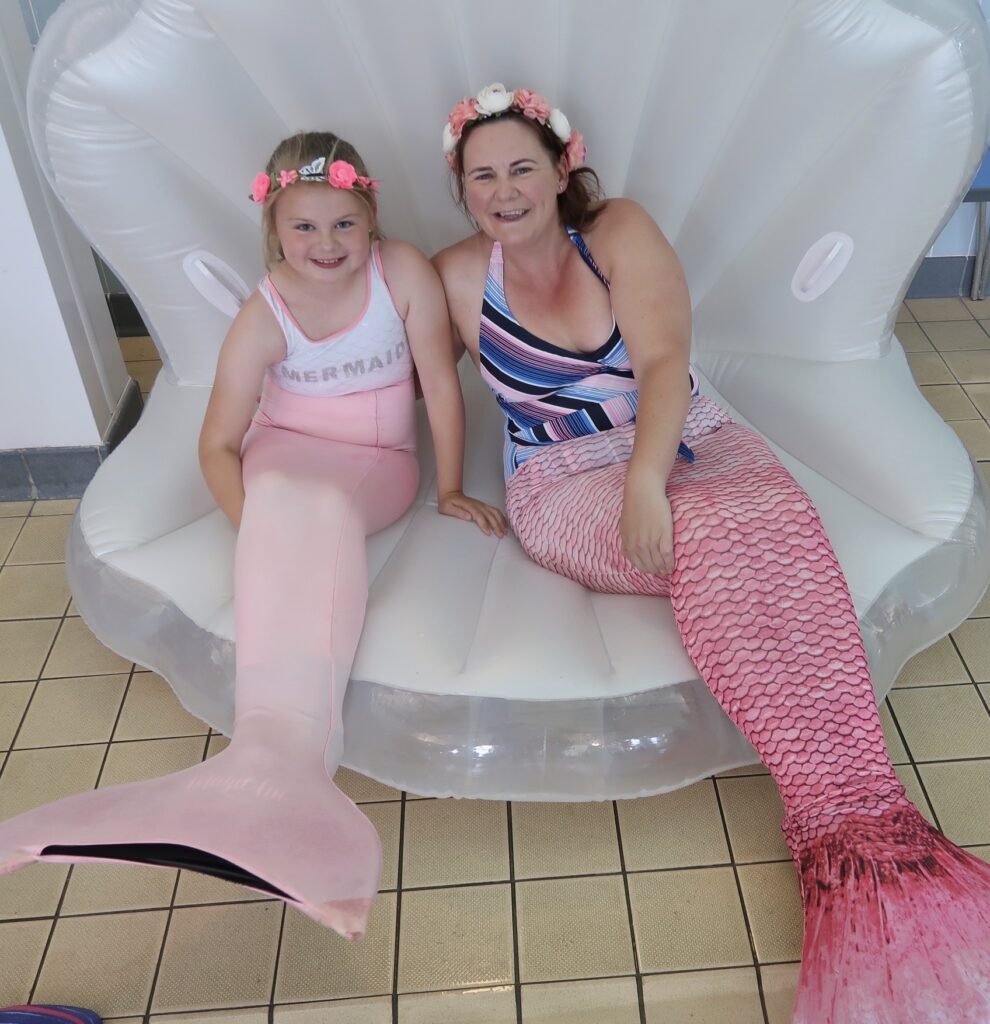
- Check out the Time Together campaign for lots of activity ideas. They are encouraging mums and daughters to try something new together. We tried mermaid swimming which was great fun.
- Do active things together with friends. My best friend has two girls and with Erin, the five of us often get out and get active. We have played laser tag together, we swim together or we just head to the forest for a long walk. Keeping active doesn’t always have to be exhausting traditional sports it can definitely be having fun and being active too.
Choose this October to step up your physical well-being. Use half term to try something new with your daughters and let me know what you did and how it went.
